News
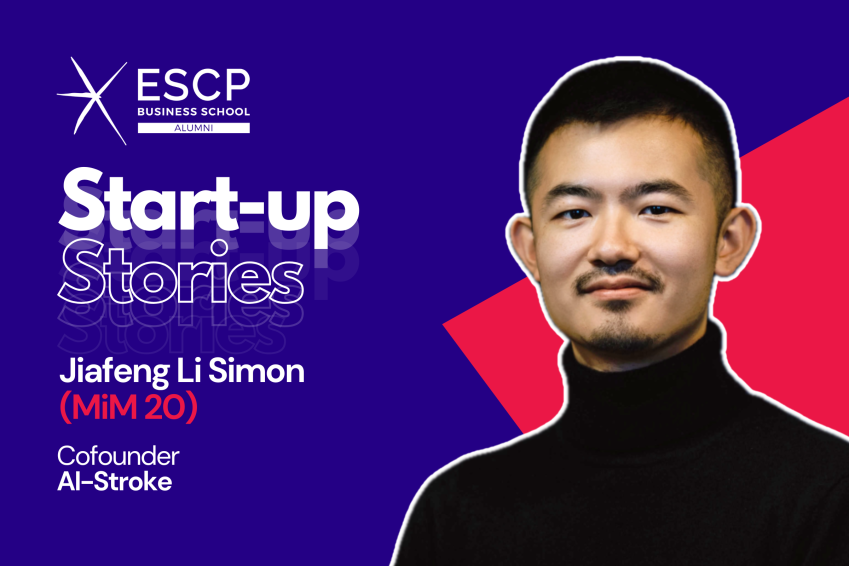
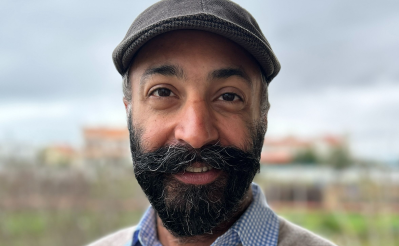
[Start-up Stories] Jiafeng Li Simon (MiM 20), Cofounder - AI Stroke
Discover the journey of Jiafeng Li Simon, co-founder of AI-Stroke, with the key moments that shaped his deeptech startup and his advice on turning an idea into real impact in the healthcare sector.
First, a short introduction to Jiafeng Li Simon and AI Stroke...
"I'm the Co-founder and Chief Business Officer of AI-Stroke, a deeptech startup revolutionizing stroke care. With a background in entrepreneurship, venture capital, and medical technologies, I previously led startups in virus diagnostics and invested in fertility biotech.
Graduate of ESCP Business School and the University of Minnesota’s healthcare MBA program, I combine commercial acumen with a global mindset. Today, I lead AI-Stroke’s business efforts to improve outcomes for millions of stroke patients worldwide.
AI-Stroke is a deeptech startup transforming stroke care through early detection and continuous monitoring. We built the world’s largest video dataset of stroke patients and trained an AI neurologist capable of identifying stroke symptoms before a CT scan—dramatically shortening time to treatment.
Unlike existing solutions focused on hospital workflows, we optimize the pre-hospital phase, where most delays occur. Our AI has already demonstrated significantly better sensitivity than EMS personnel in detecting stroke. Backed by the French government and top neurologists, we are also developing post-stroke monitoring tools to help the 100+ million stroke survivors worldwide prevent recurrence. "
👉 What made you want to become an entrepreneur? How did the idea for your start-up come about?
"My journey into entrepreneurship has always been driven by a desire to apply deeptech to solve pressing healthcare challenges. The idea for AI-Stroke came to life when we saw how many stroke patients arrive too late to be treated effectively, includeing both of my grandfathers. We realized that by harnessing computer vision and AI, we could intervene earlier, before a CT scan, and potentially save millions of lives. That mission, combined with a world-class and complementary founding team and strong research data, made us confident this could scale globally."
👉 How did your time at ESCP influence your entrepreneurial idea? An encounter, a course, an outstanding experience?
"ESCP gave me the foundation to navigate the intersection of technology, healthcare, and business.
The experience that stood out most was the Healthcare MBA exchange in Minnesota, where I worked with real medtech inventors and leading medtech corporations like Metronic on commercializing breakthrough products. ESCP’s international structure also taught me to collaborate across cultures, a crucial skill when you’re building global ventures.
Founding the ESCP Alumni Deeptech Group later allowed me to stay connected to the supporting ESCP ecosystem."
👉 What were the highlights of your project's development?
"A major turning point was when we built the world’s largest video dataset of stroke patients and trained an AI to outperform EMS personnel in early stroke detection.
Winning the i-Lab Grand Prize, backed by the French government, helped validate our approach.
Another milestone was securing non-dilutive funding from Bpifrance and forming partnerships with leading neurologists.
Each of these steps brought us closer to our mission and accelerated both trust and traction."
👉 Is there a key decision you would make differently?
"If I could go back, I would have focused earlier on building a stronger go-to-market strategy alongside product development.
As deeptech founders, we often prioritize the technology and clinical validation, which are crucial, but delay commercial planning until too late.
In reality, understanding reimbursement, procurement pathways, and the needs of stakeholders like hospitals and insurers should start from day one. Balancing technical ambition with early market traction would have helped us move even faster."
👉 If you had to give just one piece of advice to future ESCP entrepreneurs, what would it be?
"Solve a real problem that you genuinely care about. Entrepreneurship is a rollercoaster, and passion is your only sustainable fuel.
Don’t wait for the perfect plan: build a rough prototype, test quickly, and talk to real users early.
And lastly, leverage the ESCP network: it’s more powerful and diverse than you might think, especially in industries like healthtech and deeptech."
 1
1